Living in San Miguel de Allende: cost of living, safety and daily life
Find out whether San Miguel's walkable colonial center, arts scene and large English-speaking community are worth its higher prices for you.
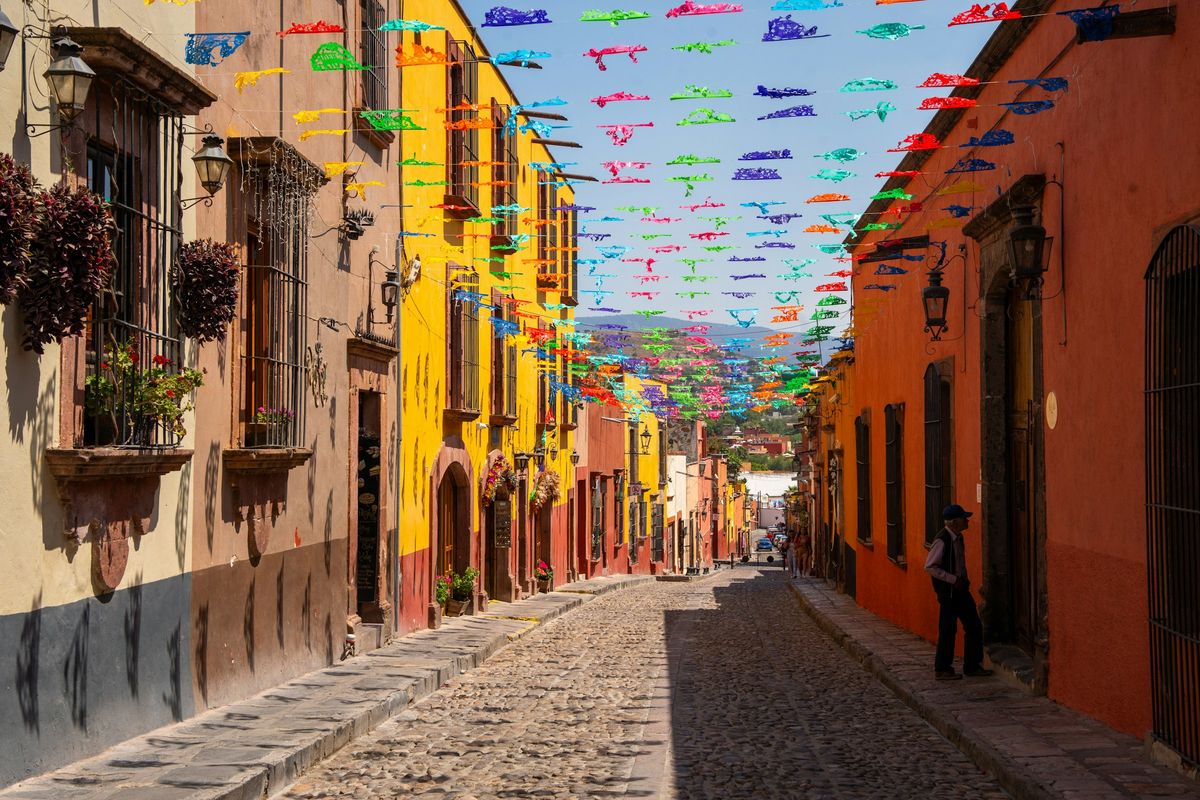
San Miguel de Allende offers a walkable colonial center, sunny highland weather and one of the most active English-speaking communities in Mexico, with art, music and volunteering on the doorstep. It suits retirees and creative people with a comfortable budget, and it is a poor fit for anyone who needs flat streets, low rents or a hospital and airport close by.
Cost figures on this page are estimates in US dollars for early planning. Check current listings and ask residents before you rely on them.
San Miguel de Allende at a glance
| Climate | Sunny and dry for most of the year; warm days and cool nights; hottest in April and May; rain from about June to September |
| Elevation | About 6,200 feet (1,900 meters) |
| Nearest international airports | Querétaro (QRO), about 1 to 1.5 hours by road; León/Bajío (BJX), about 1.5 hours |
| Hospital access | Small private hospitals and clinics in town; major hospitals in Querétaro, about an hour away |
| Typical rent, one or two bedrooms | About $1,000 to $2,200 |
| Foreign community | Large for a town this size and well organized, mostly American and Canadian, many retired or part-year |
| Spanish | Little needed in the center; useful everywhere else |
Who it suits, and who it doesn’t
San Miguel suits people who want to walk to everything, fill a calendar easily and live among painters, writers and musicians. English-language classes, lectures, charities and a long-standing bilingual public library make it easy to meet people in the first month.
It doesn’t suit everyone:
- Mobility. Streets are steep, cobbled and uneven, with narrow sidewalks. They are hard on knees and close to impossible with a walker or wheelchair.
- Budget. Housing costs well above the Mexican average.
- Altitude. At 6,200 feet, some people with heart or lung conditions struggle. Ask a doctor first.
- Wanting “real” Mexico without tourists. The center is a UNESCO World Heritage site, and it fills with visitors and wedding parties on weekends.
Neighborhoods, and how they differ
| Area | Typical rent | What it is like |
|---|---|---|
| Centro | $1,400 to $2,500 | The historic center around the main square: restored colonial houses, restaurants and noise; no car needed |
| San Antonio and Guadalupe | $1,000 to $1,800 | Flatter neighborhoods a 10 to 20 minute walk from the center; a mix of Mexican families and foreigners, with street art and small cafes |
| Guadiana, Ojo de Agua, Atascadero and Balcones | $1,300 to $2,400 | Residential hillsides south and east of the center; views, larger houses and steep climbs home |
| Los Frailes, La Lejona and the gated communities on the edge of town | $1,000 to $2,000 | Newer houses with parking and gardens; quieter; you need a car or taxis |
| Independencia and other local neighborhoods | $700 to $1,300 | Mostly Mexican, few services in English, the lowest rents |
Rents are for a one- or two-bedroom home on a one-year lease. Short winter rentals in Centro cost considerably more, and many are booked a year ahead.
Cost of living
As an estimate, a couple spends about $2,800 to $4,500 a month including rent, and a single person about $2,000 to $3,200. San Miguel sits with Mexico City and Los Cabos among the most expensive places in the country.
- Rent is the main difference. Groceries at the markets cost the same as elsewhere in the highlands.
- Restaurants in the center charge close to US prices. Neighborhood places a few blocks out do not.
- Utilities are low, since homes need no air conditioning. Winter nights can fall close to freezing and houses have no central heating, so budget for gas or electric heaters from December to February.
The cost of living in Mexico has budgets for the whole country, and Lake Chapala is the usual lower-cost alternative with a similar community.
Healthcare
The town has general practitioners, dentists, laboratories and small private hospitals that handle emergencies and routine surgery, with many English-speaking doctors. For complex care, residents travel to Querétaro, a large and prosperous city about an hour away with several major private hospitals, or to Mexico City.
Check how far a home is from the hospital you would use, and how you would get down the hill at night. Healthcare in Mexico covers costs and insurance.
Getting there and getting around
There is no airport. Most residents fly into Querétaro or León and book a shared shuttle or private driver, both of which are easy to arrange. First-class buses run to Querétaro and Mexico City.
In town, people walk, and taxis are cheap and plentiful. A car is more nuisance than help in Centro, where streets are narrow and parking is scarce. It becomes useful if you live on the edge of town or want to explore the countryside.
Safety
The center is busy until late and residents generally feel comfortable walking there. The crimes foreign residents report most are burglary, pickpocketing at festivals and occasional street robbery on quiet streets at night.
Guanajuato state has some of the highest homicide figures in Mexico, concentrated in the industrial cities in the south of the state. Recent US advisories have rated the state Level 3 and set no restrictions on travel to San Miguel de Allende. The town is not untouched, and violent incidents linked to organized crime have occurred. Read the State Department’s current Mexico travel advisory, avoid driving between cities at night, and see the safest cities in Mexico to live.
The downsides
- Price. You pay a premium to live here, and it has grown.
- Crowds. Weekends, holidays and festivals bring traffic and noise to the center.
- Fireworks and bells. They start before dawn on many saints’ days.
- Water. The region’s aquifer is overdrawn, and residents commonly filter drinking water or buy it bottled.
- Cold houses in winter. Thick stone walls stay chilly in December and January.
- A bubble. It is possible to live here for years entirely in English, which some people come to regret.
How people usually start
- Visit twice. Come once in winter, when the community is at full strength, and once in the hot, dry weeks of April or May.
- Rent for six to twelve months. Try a hillside house before committing to the daily climb. A local real estate agent can find long-term rentals that aren’t on the vacation sites.
- Check residency. See which residency option your income supports.
- Take advice before buying. San Miguel is inland, so foreigners can hold title directly. Old houses need a careful inspection. See buying property in Mexico.
The best places to live in Mexico compares San Miguel with the lake, the coasts and the big cities.
Common questions
Is San Miguel de Allende safe?
San Miguel de Allende is generally calm in daily life, and its center is busy and well lit in the evening. Its state, Guanajuato, has been rated Level 3 in recent US travel advisories because of organized crime in the south of the state, with no travel restrictions set for San Miguel de Allende. Check the current advisory.
How much does it cost to live in San Miguel de Allende?
As an estimate, a couple living in San Miguel de Allende spends about $2,800 to $4,500 a month including rent, and a one- or two-bedroom home rents for about $1,000 to $2,200. San Miguel de Allende is one of the more expensive towns in Mexico, mainly because of housing.
How many expats live in San Miguel de Allende?
Nobody counts the expats in San Miguel de Allende precisely. Estimates commonly put the foreign community in the thousands, most of them American and Canadian, in a municipality of well over 100,000 people. Many are part-year residents who come for the winter.
Does San Miguel de Allende have an airport?
No. San Miguel de Allende has no commercial airport. The nearest are Querétaro, about an hour to an hour and a half away by road, and León (Bajío), about an hour and a half away. Mexico City's airport is about three and a half to four hours away.
Sources
This page is general information, not professional advice. Rules and amounts change, and officials apply them differently. Confirm the details with the relevant authority or a qualified professional before you act on them.