Living in Lake Chapala and Ajijic: the American community, costs and safety
See whether Lake Chapala's mild weather, ready-made community and nearby big-city hospitals fit the retirement or move you have in mind.
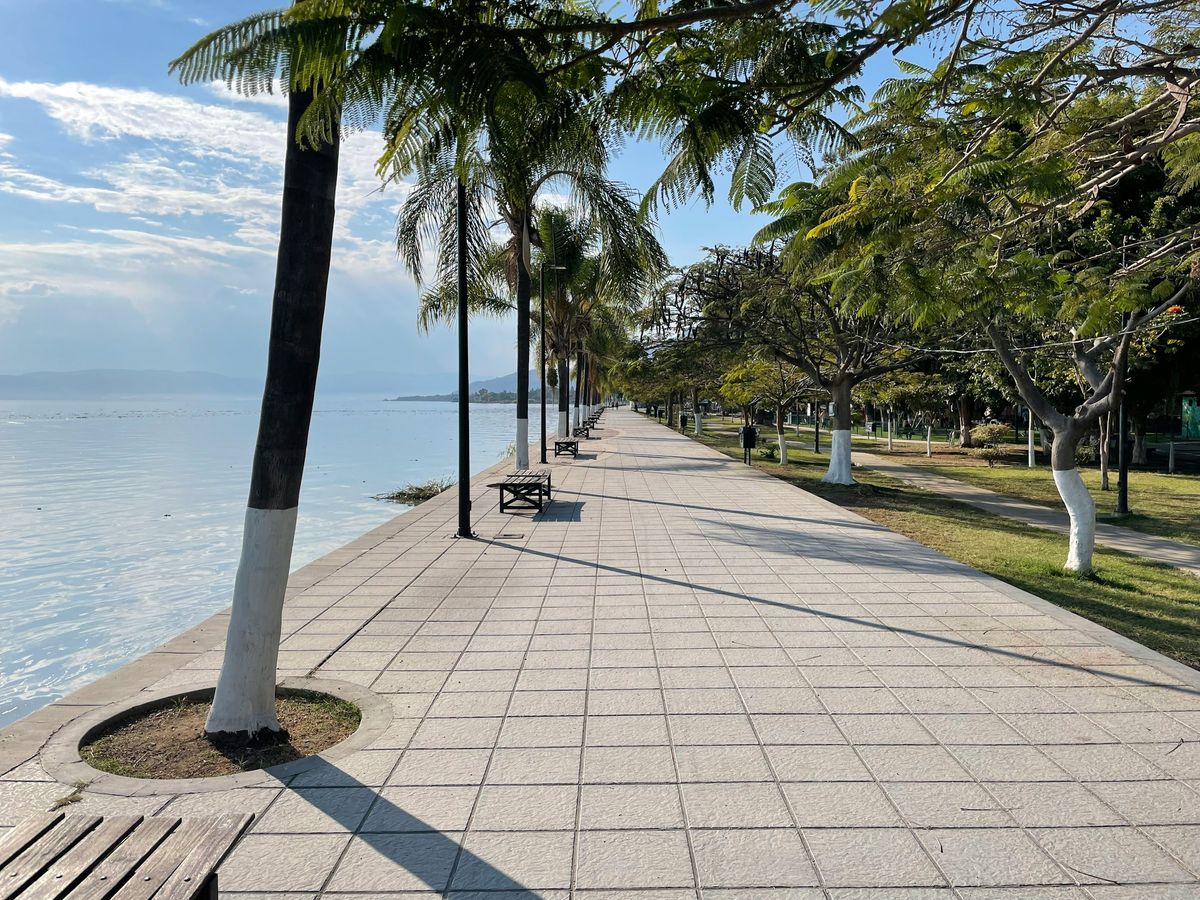
Living in Ajijic and the other Lake Chapala towns means joining one of the largest and longest-established American communities in Mexico, in mild weather about an hour from Guadalajara. It suits retirees who want an easy landing with English widely spoken, while people who want a real city choose Guadalajara itself.
Lake Chapala gives you spring-like weather all year, a welcoming English-speaking community that has been here for decades, and Guadalajara’s hospitals and airport less than an hour away. It suits retirees who want an easy landing in small-town Mexico, while people who want a real city choose Guadalajara itself.
Cost figures on this page are estimates in US dollars for early planning. Check current listings and ask residents before you rely on them.
Lake Chapala and Guadalajara at a glance
| Climate | Mild all year: highs mostly in the mid-70s to mid-80s°F (24 to 30°C); warmest in May; rain from about mid-June to October |
| Elevation | About 5,000 feet (1,520 meters) at the lake; Guadalajara is slightly higher |
| Nearest international airport | Guadalajara (GDL), about 30 to 45 minutes from Chapala and Ajijic |
| Hospital access | Clinics and small private hospitals at lakeside; major private hospitals in Guadalajara, about an hour away |
| Typical rent, one or two bedrooms | About $700 to $1,500 at lakeside; $700 to $1,400 in Guadalajara |
| Foreign community | Thousands of Americans and Canadians at lakeside, mostly retired, and more in winter. Small and scattered in Guadalajara |
| Spanish | Little needed in Ajijic; needed every day in Guadalajara |
Who it suits, and who it doesn’t
Lakeside suits people who want a soft landing. English is widely spoken in Ajijic, clubs and volunteer groups are easy to join, and you can live without air conditioning or heating.
It is a poor fit if you want a beach, nightlife or neighbors your own age when you are under 50. The foreign community is overwhelmingly retired, and the lakeside towns are small. The lake is for looking at and walking beside. Few people swim in it.
Guadalajara suits people who want a city of several million, with universities, a tech sector, serious restaurants and far fewer foreigners. You need working Spanish.
The towns, and how they differ
The foreign community lives along about 15 miles (25 km) of the north shore, strung along one main road.
| Place | Typical rent | What it is like |
|---|---|---|
| Ajijic | $800 to $1,500 | The center of expat life: cobbled village streets, galleries, restaurants, and hillside neighborhoods with lake views |
| San Antonio Tlayacapan and Riberas del Pilar | $700 to $1,300 | Between Ajijic and Chapala; residential, close to the shops on the main road |
| Chapala | $600 to $1,100 | The largest town, with a long waterfront promenade; more Mexican, and busy with visitors from Guadalajara on weekends |
| San Juan Cosalá and Jocotepec | $600 to $1,100 | Toward the west end of the lake; quieter, with fewer foreigners and fewer services in English |
| Guadalajara: Colonia Americana, Providencia, Chapalita | $700 to $1,400 | Leafy central neighborhoods with cafes and older houses; walkable by Guadalajara standards |
| Zapopan | $900 to $1,800 | The newer, wealthier west side of the metro area: towers, malls and private hospitals; you need a car |
Rents are for a one- or two-bedroom home on a one-year lease. Houses with pools and views in Ajijic cost more, and winter-only rentals cost more still.
The American community at Lake Chapala
Americans and Canadians have been retiring to the lake’s north shore for generations, and the community is large enough that a newcomer can run most of daily life in English in Ajijic. Its character:
- Mostly retired. The great majority of foreign residents are past working age, and many are couples.
- Seasonal. Numbers rise from about November to April, when Canadians and part-year Americans arrive, and fall in the summer rains.
- Organized. Many foreign residents join the Lake Chapala Society in Ajijic, a long-running membership organization with a library, classes and information for newcomers. Churches, theater groups, clubs and volunteer groups working with local schools and animal shelters are easy to find.
- Concentrated in Ajijic. Chapala town and the villages at the west end of the lake have far fewer foreigners, and Guadalajara’s foreign community is small and spread out.
The flip side is that it is easy to live in a bubble. Residents who learn some Spanish and spend time in Chapala, Jocotepec and Guadalajara tend to say they get more from the move. Living in Mexico as an American covers daily life more broadly.
Cost of living
As an estimate, a couple at lakeside spends about $2,000 to $3,300 a month including rent, and a single person about $1,500 to $2,300. Three things keep it below the beach towns:
- Low utility bills. Few homes need air conditioning or heating, so electricity is often $20 to $50 a month.
- Affordable household help. A gardener or cleaner one day a week is common.
- Guadalajara’s shops. Big-box stores and markets are a drive away, which keeps prices in check.
Ajijic’s popularity has pushed rents up, and restaurants aimed at foreigners charge more than those in Chapala. The cost of living in Mexico compares rents across nine places.
Healthcare
Lakeside has general practitioners, dentists, specialists who visit from Guadalajara, and a few small private hospitals for emergencies and routine procedures. For major surgery, cancer care and intensive care, residents go to Guadalajara, which has some of the best private hospitals in Mexico and large university medical schools.
That drive is about an hour in normal traffic and longer at rush hour, which matters in a cardiac emergency. Ask which hospital an ambulance would take you to from any home you are considering. Healthcare in Mexico explains costs, insurance and the public system.
Getting there and getting around
Guadalajara’s airport sits south of the city on the road to Chapala, so it is closer to the lake than to much of Guadalajara. It has direct flights to many US cities.
At lakeside, local buses run along the main road and taxis are cheap, so people who live in Ajijic village or central Chapala can manage without a car. Most residents elsewhere drive. In Guadalajara, ride-hailing is inexpensive and traffic is heavy. Puerto Vallarta is the nearest beach, roughly three and a half to five hours by road depending on the route.
Safety
Daily life in the lakeside towns is calm. Residents mostly report burglary of empty houses, petty theft and phone scams.
Jalisco is also the home of one of Mexico’s most powerful criminal organizations, and the state has been rated Level 3, “reconsider travel”, in recent US advisories. Those advisories have set no restrictions on travel to the Guadalajara metropolitan area, Chapala or Ajijic. Levels and restrictions are reviewed regularly, so check the State Department’s current Mexico travel advisory before you rely on them. Security operations have at times been followed by road blockades and burned vehicles in Guadalajara, most recently in February 2026. Guadalajara, like any large city, has neighborhoods to avoid, and crime there is higher than at the lake.
Read the current advisory, and see the safest cities in Mexico to live for how to check a neighborhood.
The downsides
- One road. The lakeside highway carries everything, and it is slow in winter and on weekends.
- The lake itself. Its level rises and falls from year to year, and water quality is a long-running concern.
- An older crowd. Working-age people and families are few.
- Rainy-season wear. Summer storms bring leaks, mud on the hillside streets and insects.
- Distance to serious care. An hour to a major hospital is the main trade-off as you age.
- Noise. Fireworks, church bells and village fiestas are frequent.
How people usually start
- Visit in May or in July. May is the hottest, driest month, and July shows you the rains.
- Rent for six to twelve months. Try Ajijic and one other town before choosing. A local real estate agent can show long-term rentals.
- Check residency. See which residency option your income supports.
- Buy later, if at all. The lake is inland, so foreigners can hold title directly. Buying property in Mexico explains the process and what to check.
If you want colonial streets and a bigger arts scene, compare San Miguel de Allende. The best places to live in Mexico sets every region side by side, and retiring in Mexico covers pensions and Medicare.
Common questions
Is Lake Chapala a good place to retire?
Lake Chapala is one of the easiest places in Mexico to retire to. The lakeside towns have mild weather all year, a long-established English-speaking community, and Guadalajara's hospitals and international airport within about an hour. Lake Chapala is a poor fit for people who want a beach, a big city on the doorstep or a young crowd.
Is there a large American community at Lake Chapala?
Yes. Lake Chapala, and Ajijic in particular, has one of the oldest and largest American and Canadian communities in Mexico: thousands of residents, mostly retired, with more in the winter months. English is widely spoken in Ajijic, and clubs, volunteer groups and the Lake Chapala Society make it easy to meet people.
How much does it cost to live in Lake Chapala or Ajijic?
As an estimate, a couple living at Lake Chapala spends about $2,000 to $3,300 a month including rent, and a one- or two-bedroom home in Ajijic rents for about $800 to $1,500. Chapala town and the villages at the west end of the lake cost less than Ajijic.
Is Ajijic, Mexico safe?
Ajijic and the other Lake Chapala towns are generally calm in daily life, and residents mostly report burglary and petty theft. The state of Jalisco has been rated Level 3 in recent US travel advisories because of organized crime elsewhere in the state, with no travel restrictions set for the Chapala and Ajijic area. Check the current advisory.
What is the difference between Lake Chapala and Ajijic?
Lake Chapala is the lake, and people also use the name for the string of towns on its north shore. Ajijic is the village on that shore where most foreign residents live. Chapala is the larger, more Mexican town about 5 miles (8 km) to the east of Ajijic.
Sources
This page is general information, not professional advice. Rules and amounts change, and officials apply them differently. Confirm the details with the relevant authority or a qualified professional before you act on them.